

From near extinction to a new normal: White-tailed eagle populations in Northern Europe face new constraints
After several decades of strong growth, the white-tailed eagle is no longer primarily limited by human persecution. A recently published study in Oikos shows that white-tailed eagle numbers have increased substantially at regional, national, and European scales from the 1960s to the present day. More recent developments are characterized by a slower population growth. This is mainly due to intrinsic population regulation, but climate change is also having a negative impact.
The remarkable recovery of the white-tailed eagle
The white-tailed eagle (Haliaeetus albicilla) was close to extinction across large parts of Europe for much of the twentieth century. Long-term persecution, environmental contaminants and other human-induced pressures led to severe population declines, and several local populations disappeared entirely. Following stronger legal protection during the 1950s and 1960s, populations gradually began to recover, with particularly strong growth from the 1970s through the turn of the millennium.
“In Northern Norway, the white-tailed eagle fared better than in many other regions, but the population here has also grown substantially following legal protection,” says Bård-Jørgen Bårdsen, researcher and co-author of a recently published study on the population dynamics of white-tailed eagles.
Together with two colleagues at the Norwegian Institute for Nature Research, he used multiple data sources to describe population trends across large geographic areas while also investigating the mechanisms underlying population growth in Steigen, Nordland, which was a core area for the species when the study began.
A long time series offered unique opportunities
The researchers combined long-term monitoring of breeding success, observations from the Norwegian Species Observation System (www.Artsobservasjoner.no), literature reviews of earlier data from Norway and Europe and statistical analyses. They examined how population growth and reproduction were influenced by both population size and climate. Special attention was given to the relationship between population dynamics and winter sea surface temperatures (SST), which increased throughout the study period.
Among other factors, the study measured changes in the number of breeding pairs, the proportion of successful breeding attempts and the number of fledglings produced per nest. Statistical models were used to assess the effects of both population size and temperature conditions, including delayed climate effects that became apparent one or two years later.
Population growth slowed by density dependence
The most important finding was that the population now exhibits clear signs of negative density dependence. In other words, the population growth rate declined as the population grew.
“As more white-tailed eagles compete for territories, food resources, and nesting sites, it becomes increasingly difficult for the population to continue growing at the same rate as before,” explains researcher and co-author Jan Ove Bustnes.
The results suggest that the local population has transitioned from a phase of rapid exponential growth to one in which natural regulatory mechanisms play an increasingly important role.
Climate influences reproductive success
The study also showed that climate conditions affect the breeding success of white-tailed eagles. Higher winter sea temperatures had negative effects on reproduction, particularly on the proportion of successful nests and the number of offspring produced. These effects often appeared with a delay of one or two years and were strongest at the highest temperatures and in the largest populations.
“This may be because climate change affects prey availability and thus the food resources available to white-tailed eagles, although the underlying mechanisms are not yet fully understood,” says Bårdsen.
Previous studies have shown that ocean warming also threatens seabirds, many of which are prey for white-tailed eagles.
Important implications for management
The study demonstrates that the challenges facing white-tailed eagles have changed in character. Whereas populations were previously threatened primarily by direct human impacts, they now appear to be naturally regulated by territorial and food-resource limitations, while climate change introduces new challenges.
“For researchers and management authorities, this means that future population projections must account for both density dependence and climate effects. Improving our understanding of how climate change affects food availability, and of the local factors driving population dynamics in different regions, will be particularly important,” says Bård-Jørgen Bårdsen.
The study illustrates how one of Europe’s great conservation success stories has entered a new phase: the white-tailed eagle has recovered from the brink of extinction but now faces the ecological constraints that accompany a large and well-established population.
A potential threat to seabirds
White-tailed eagles threaten seabirds both directly and indirectly. When eagles visit breeding colonies, birds may fly out from their nests, making eggs and chicks more vulnerable to predation by gulls and corvids. Studies from regions including the Baltic Sea and Northern Norway have linked increased white-tailed eagle activity to lower breeding success in common guillemots (Uria aalge), black-legged kittiwakes (Rissa tridactyla), common eiders (Somateria mollissima), northern gannets (Morus bassanus) and great cormorants (Phalacrocorax carbo). These effects may be particularly pronounced in years with poor food availability or other environmental pressures.
At the same time, it remains difficult to determine the overall importance of white-tailed eagle predation for seabird populations. The white-tailed eagle is a generalist predator that feeds on birds, fish, and mammals and there is still limited recent knowledge regarding both its diet and the status of its prey populations. Nevertheless, the available research suggests that white-tailed eagles may add to pressures on already vulnerable seabird colonies.
Read the article:
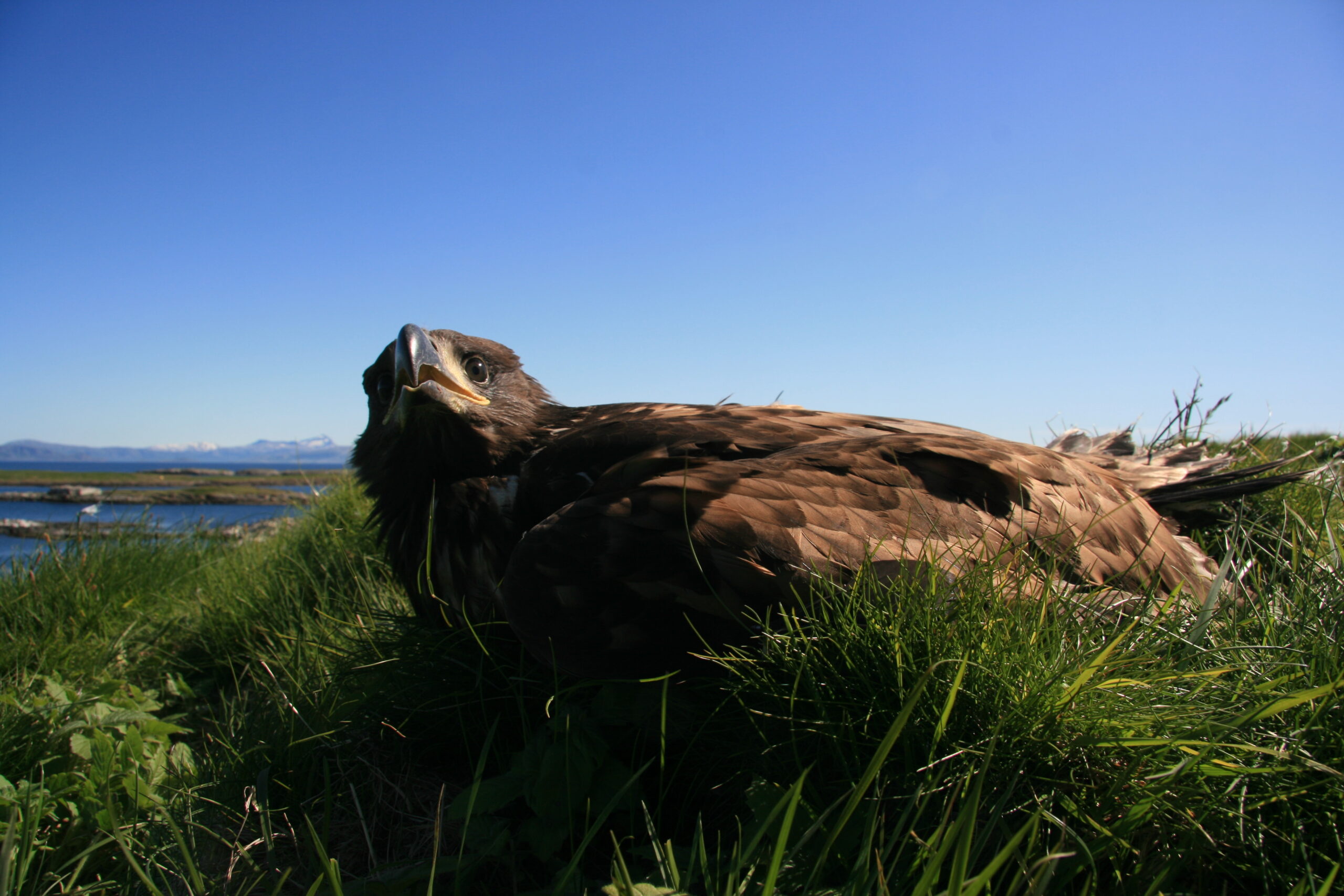
Photo © Bård-Jørgen Bårdsen
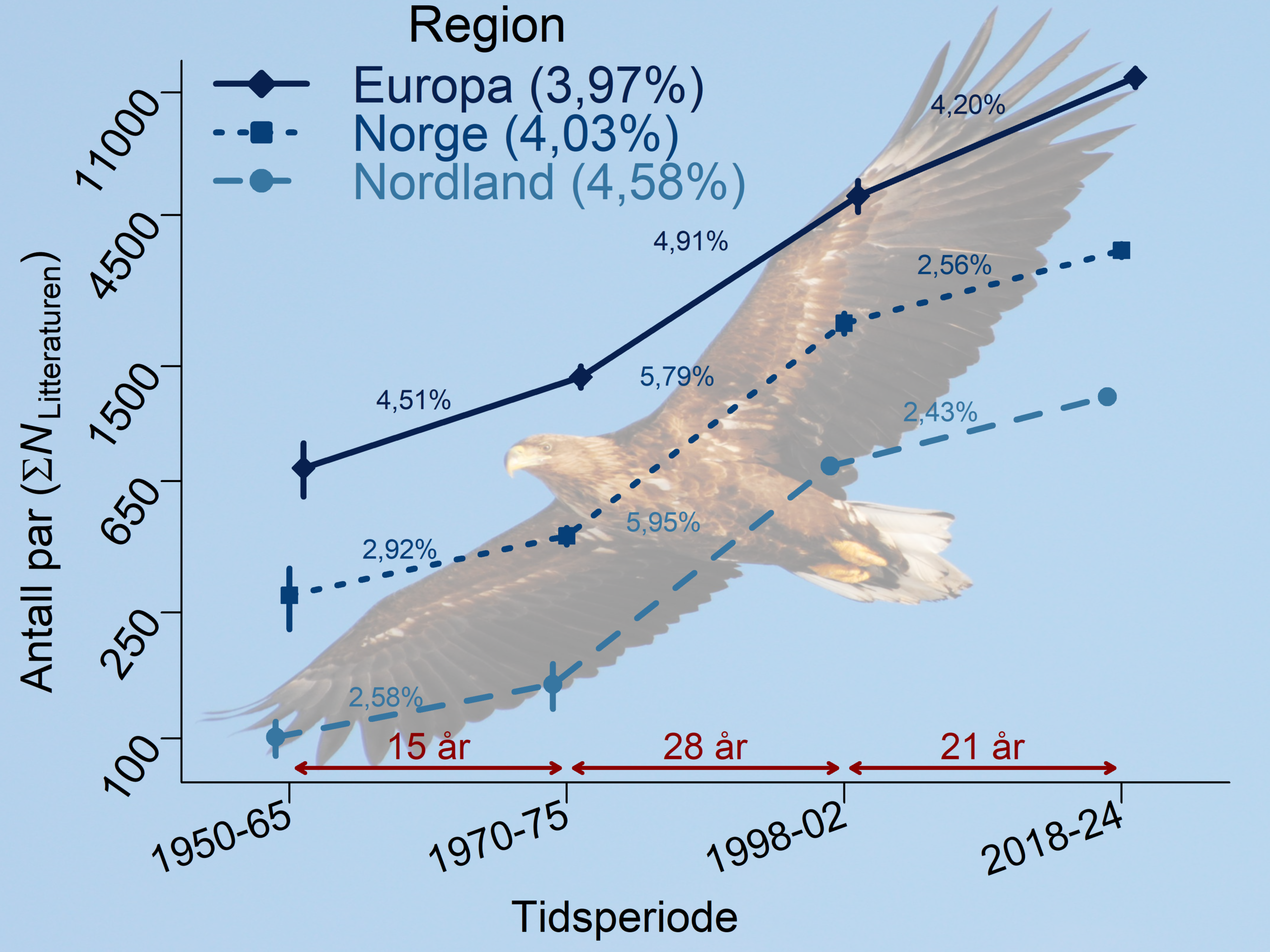
Background photo © Elisabeth Hansen
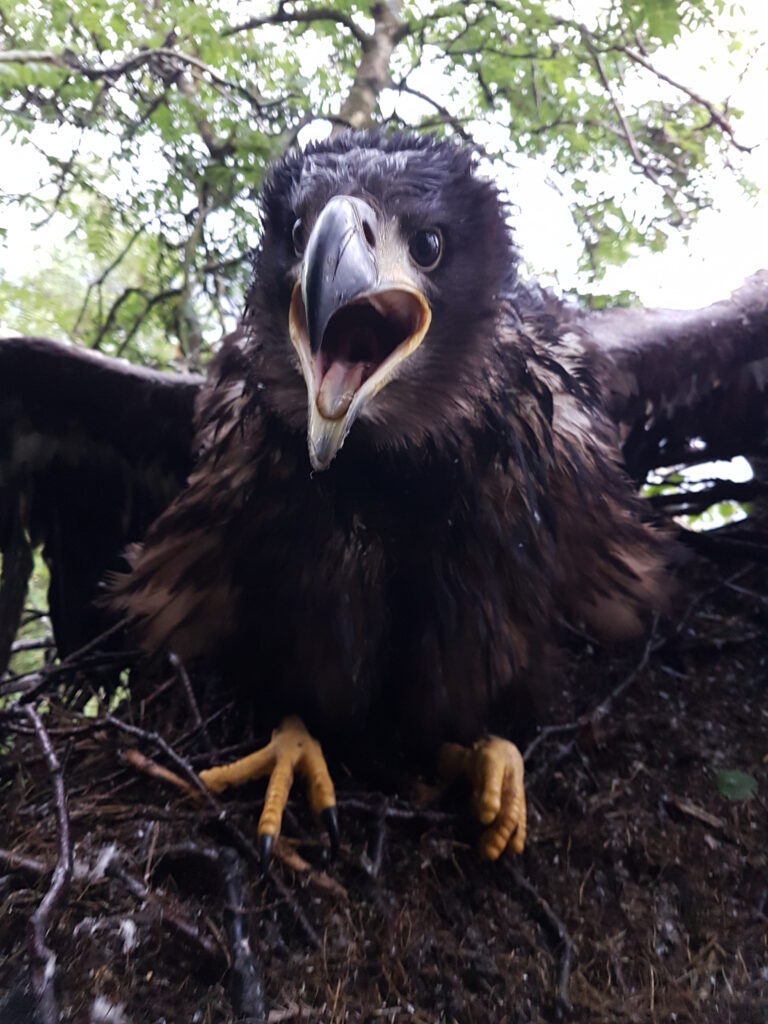
Photo © Bård-Jørgen Bårdsen
Contact person: Jan Ove Bustnes, Norwegian Institute for Nature Research