
Skip to content
SEAPOP

SEAPOP

About seabirds – for a richer ocean

  • Norsk
  • Home
  • Activities and scope
    • Mapping
      • Coastal populations
      • Populations at sea
      • Migrations and habitat use
    • Population sizes
    • Monitoring
      • Population development
        • Breeding populations
        • Winter poulations
        • Populations at sea
      • Reproduction
      • Survival
      • Diet
      • Phenology
    • Methods
      • Mapping along the coast
      • Mapping at sea
        • Study areas
        • Data analysis
      • Mapping migration and habitat use
      • Methods for calculating population sizes
      • Monitoring
    • Species
    • Key sites
    • Causal research
  • Distribution and status
    • Distribution
      • Breeding populations
      • Distribution outside the breeding season
      • Seabirds at sea
    • Time series data
      • Population development
      • Reproduction
      • Survival
      • Diet
      • Phenology
  • SEATRACK
  • Publications
  • About SEAPOP
    • Executive institutions and Science Group
    • Economic contributors and Steering Committee
    • Other contributors
    • Contact us
    • News
SEAPOP

Home

News

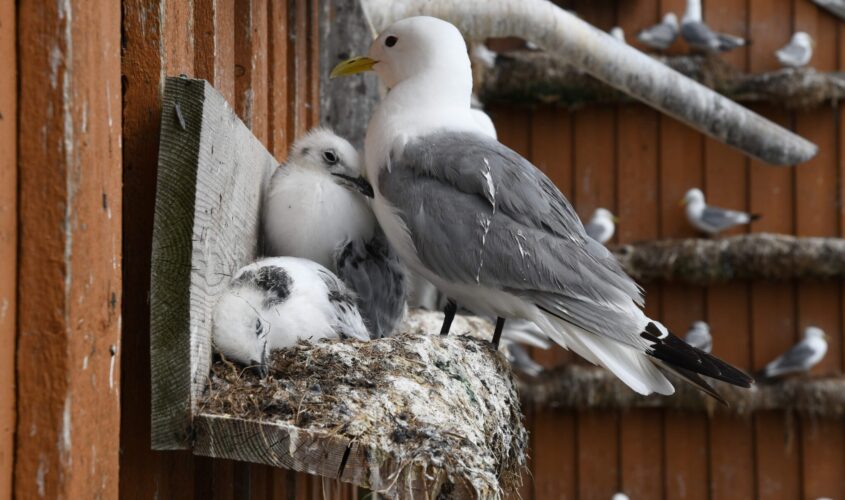
A fieldworker checks the contents of a black-legged kittiwake’s nest. A fieldworker checks the contents of a black-legged kittiwake nest in Grumantbyen on Svalbard using a mirror on a stick. Photo © Sébastien Descamps

Environmental stress affects all kittiwakes – but not to the same degree

April 10, 2026

Birds – like humans – react differently to different situations. Can personality influence how they cope with physiological stress?

Atlantic puffin on the edge of a cliff. Photo © Hallvard Strøm

Genetic traces reveal how the Atlantic puffin has adapted to life in the north

March 24, 2026

By analysing multiple types of genetic variation, researchers gained a more nuanced understanding of how the puffin has evolved in different marine regions.

Lesser black-backed gull (Larus fuscus) with GPS. Photo © Sindre Molværsmyr

Newly-developed attachment method for bird loggers

March 10, 2026

A 3D-printed lightweight solution that is low-cost, flexible and involves less disturbance for the birds.

Atlantic puffin with mackerel. Photo © Tycho Anker-Nilssen

As oceans warm, seabirds struggle – but not everywhere

February 23, 2026

A multinational study highlights the importance of species diversity in ecosystems under climate stress.

More news
Maps and data
Insight into distribution- and time series data
SEATRACK
Migration patterns outside the breeding season
GPS tracking
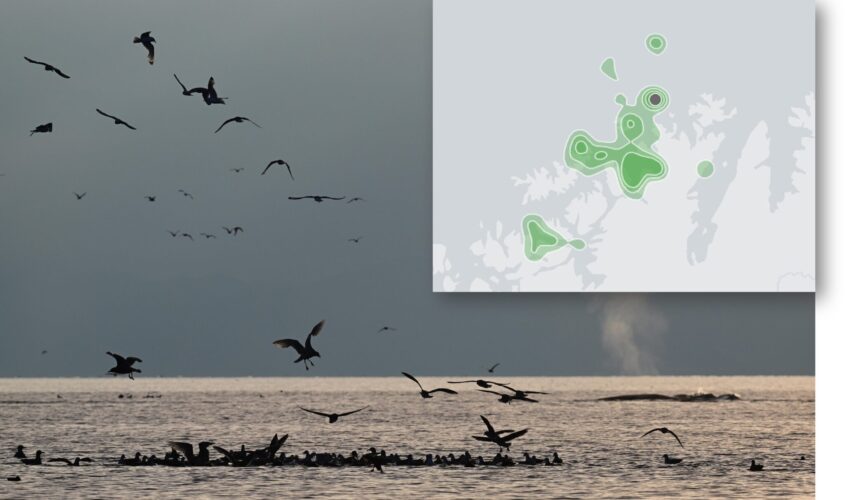
Seabird habitat use during the breeding season
Register data
Data reporting to the seabird mapping authority

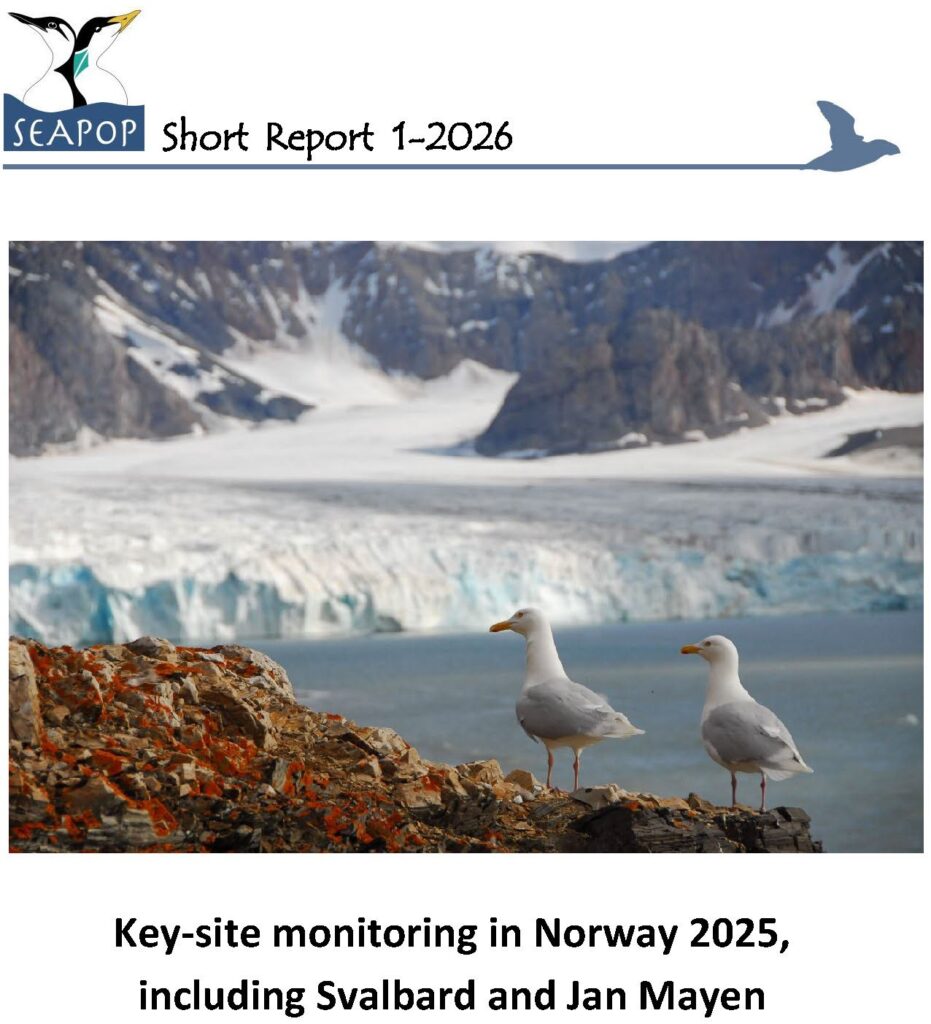
SEAPOP Short Report

Key-site monitoring in Norway 2024.

Latest publications

Environmentally induced stress affects fitness of bold and shy alike: A long-term study of personality and feather corticosterone in Arctic-breeding kittiwakes

An individual-based model to quantify the non-breeding season impact of wind farms on seabirds

Divergent migratory strategies of black guillemots from two colonies in the Norwegian Sea

A novel non-permanent attachment method for bird-borne tracking devices using 3D-printed clamps

From pictures to numbers: Multi-species seabird surveys using drone imagery and neural networks

More Publications

This is SEAPOP

Program description

Maps and data

Contact us

Find specific people

Facebook

Twitter

Executive institutions

Norwegian institute for nature research

Norwegian Polar Institute

Design and development: Gnist Design

  • Home
  • Activities and scope
    • Mapping
      • Coastal populations
      • Populations at sea
      • Migrations and habitat use
    • Population sizes
    • Monitoring
      • Population development
        • Breeding populations
        • Winter poulations
        • Populations at sea
      • Reproduction
      • Survival
      • Diet
      • Phenology
    • Methods
      • Mapping along the coast
      • Mapping at sea
        • Study areas
        • Data analysis
      • Mapping migration and habitat use
      • Methods for calculating population sizes
      • Monitoring
    • Species
    • Key sites
    • Causal research
  • Distribution and status
    • Distribution
      • Breeding populations
      • Distribution outside the breeding season
      • Seabirds at sea
    • Time series data
      • Population development
      • Reproduction
      • Survival
      • Diet
      • Phenology
  • SEATRACK
  • Publications
  • About SEAPOP
    • Executive institutions and Science Group
    • Economic contributors and Steering Committee
    • Other contributors
    • Contact us
    • News
  • Norsk