

Drones and artificial intelligence bring new precision to seabird monitoring
A new study shows how the combination of drone imagery and artificial neural networks can strengthen the monitoring of seabirds along the Norwegian coast. The method delivers high accuracy while minimizing disturbance to birdlife – an important advance at a time when many seabird species are in decline.
Image analysis – the major bottleneck
Traditional seabird surveys have long been time- and resource-intensive, often with a risk of disturbing birds during the breeding season. Drones have made it possible to collect large volumes of image data in a gentler manner, but analysing the resulting vast datasets has remained a challenge. This study addressed this issue by training an advanced detection model based on so-called deep neural networks – a machine-based and highly simplified imitation of the biological neural tissue of the human brain.
Trained to recognize birds
Over three breeding seasons, drone images were collected from 163 colonies along the coast, and more than 23 000 birds were manually annotated. Using an image-processing workflow, the researchers created geometrically corrected, high‑resolution aerial image maps (orthomosaics), and adjusted image sizes to ensure compatibility with standard deep‑learning frameworks, which are used to train data algorithms. A total of 131 orthomosaics were then used to train the neural network model, which was ultimately evaluated based on its ability to detect and identify bird species in imagery from 32 colonies.
High detection rate
The fully trained model achieved a detection rate of 87.5 %, meaning it found nearly nine out of ten birds in the image material. Of these detections, 92.4 % of individuals were correctly classified by species. The model also performed well in multi-species colonies, although some errors occurred due to confusion between visually similar species.
Promising methodology
The study demonstrated that combining drones and artificial intelligence provides an efficient and scalable solution for monitoring seabird populations. The method reduces the need for manual analysis, saves time and resources, and can improve the basis for informed seabird management. Although new methodologies must be thoroughly calibrated against traditional counting methods, the study shows that this technology has the potential to become an important tool for tracking population trends at a time when many seabird species are under pressure.
Read the article:
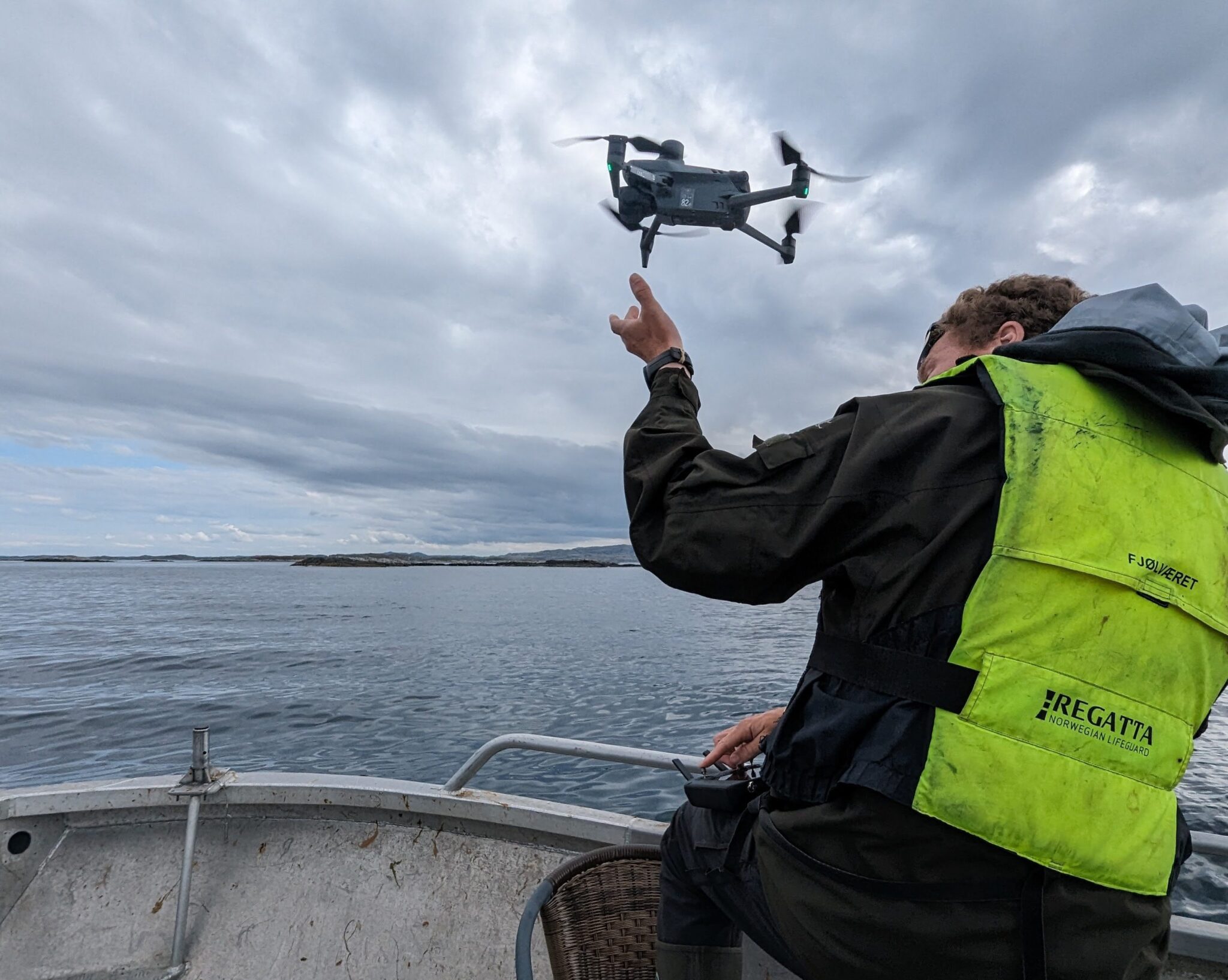
Photo © Sindre Molværsmyr
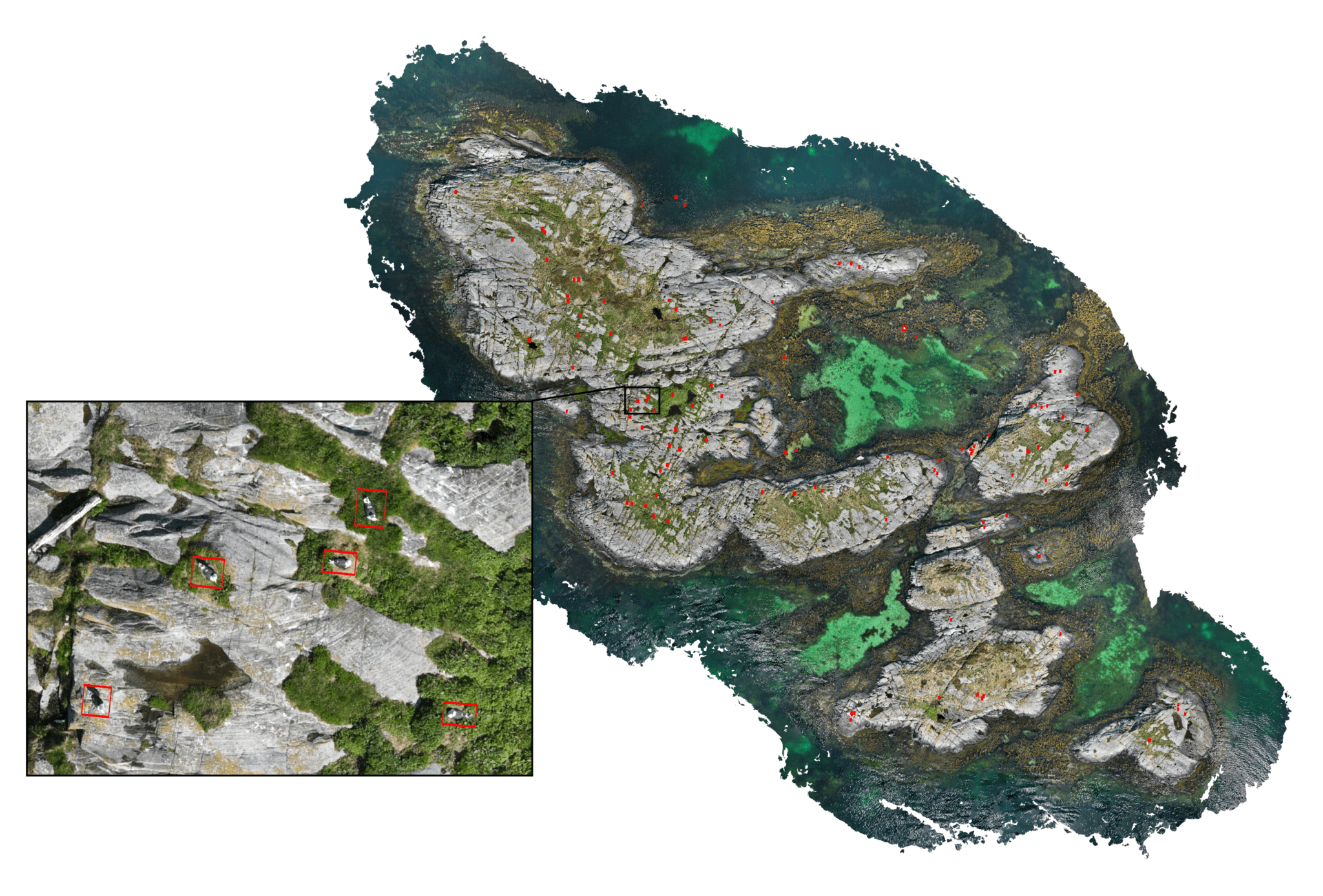
Illustration © Mie Prik Arnberg.
Contact person: Sindre Molværsmyr, Norwegian Institute for Nature Research