

Seabirds as indicators of sustainable fisheries management
By combining data from long-term monitoring of demography, year-round seabird tracking, fisheries landings and ocean temperature, researchers evaluated whether ecosystem-based management of capelin is sufficient to maintain prey availability for dependent seabirds.
A key species for marine fauna
Capelin is one of the most important forage fish species in the Barents Sea and forms a key link between plankton and top predators such as cod, marine mammals and seabirds. At the same time, capelin supports an economically important commercial fishery, conducted during late winter-spring when seabirds return to breeding colonies and capelin migrate towards the Norwegian coast to spawn. This raises the question of whether prey removal by commercial fisheries has negative consequences for seabirds.
Four-species study
To investigate this, researchers analysed eight breeding populations of four pelagic seabird species with distributions overlapping the spring fishery for capelin: Atlantic puffins (Fratercula arctica), common guillemots (Uria aalge), Brünnich’s guillemots (Uria lomvia) and black-legged kittiwakes (Rissa tridactyla). They linked annual adult survival estimates from long-term capture-mark-resight studies with capelin fisheries landings, prey abundance and sea surface temperatures across the birds’ distributions.
Limited evidence for direct fishery effects
Direct negative effects of capelin fisheries on adult survival were only detected in common guillemots breeding at Hjelmsøya, where overlap between the birds’ pre-breeding distribution and capelin fishing activity was particularly high. Under current levels of capelin fishery, there was little evidence that prey removal by fisheries substantially reduced adult survival in the other study populations. The results suggest that the current management system for Barents Sea capelin may largely be operating within ecologically safe limits for seabirds under present environmental conditions. The fishery is managed using precautionary harvest rules, including automatic closures when the capelin stock falls below defined thresholds.
Climate and prey availability remain important
Warmer autumn sea temperatures were associated with reduced capelin abundance in some areas, supporting previous evidence that climate change is reshaping the Barents Sea ecosystem. The Barents Sea is among the fastest-warming marine regions globally, and ongoing warming may increasingly affect the availability and distribution of important prey species in the future.
Seabird survival – a useful indicator
The study demonstrates how seabird survival can be used to assess the effectiveness of ecosystem-based fisheries management. Because adult survival integrates effects of multiple environmental pressures over time, it may provide a useful indicator of whether forage-fish harvest remains within sustainable ecological limits.
The study provides important insight into how man-made substances spread to even the most remote ecosystems. The puffin thus becomes not only a symbol of the Arctic but also a sentinel of our global impact.
Read the article:
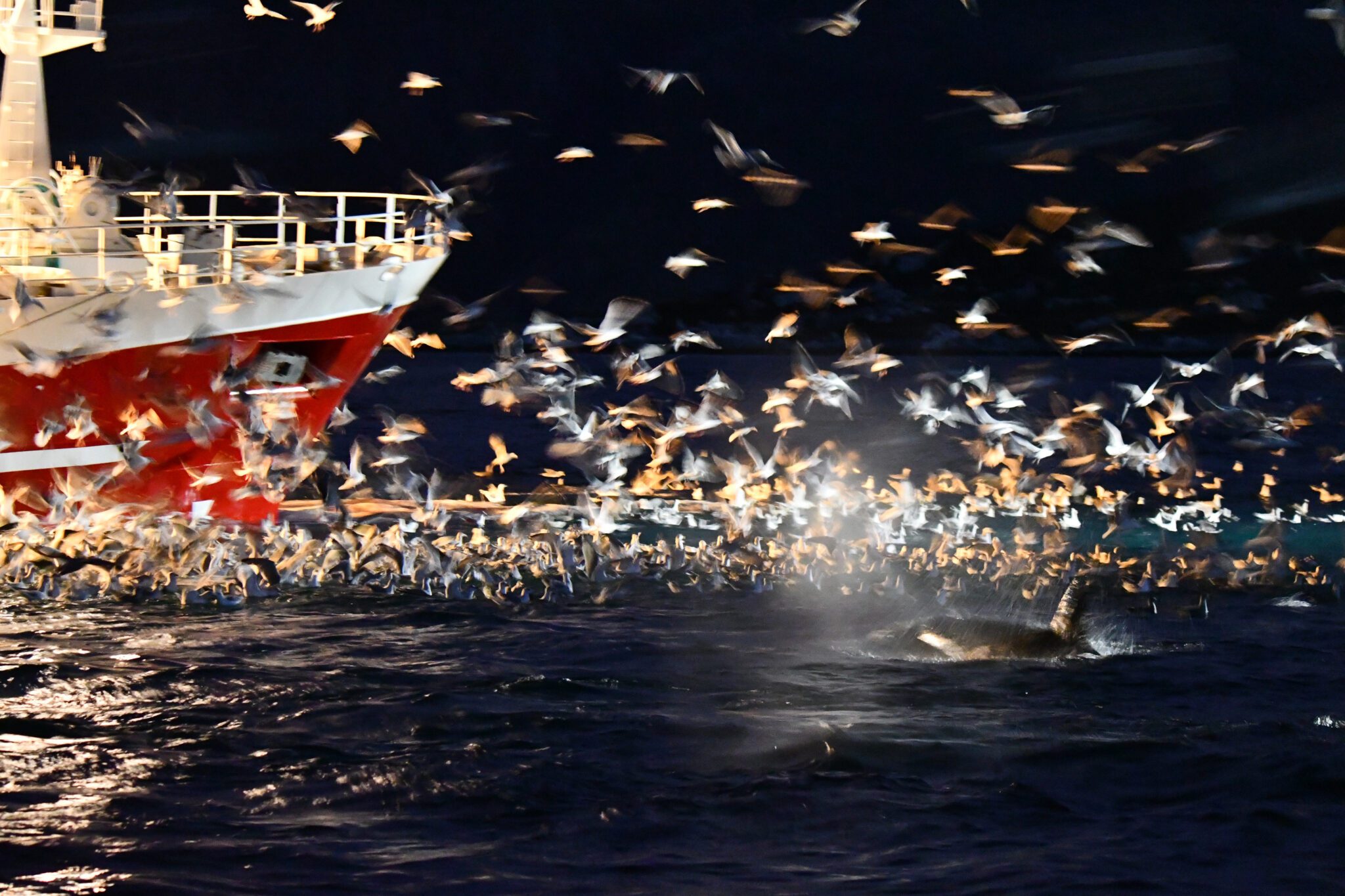
Photo © Signe Christensen-Dalsgaard, Norwegian Institute for Nature Research
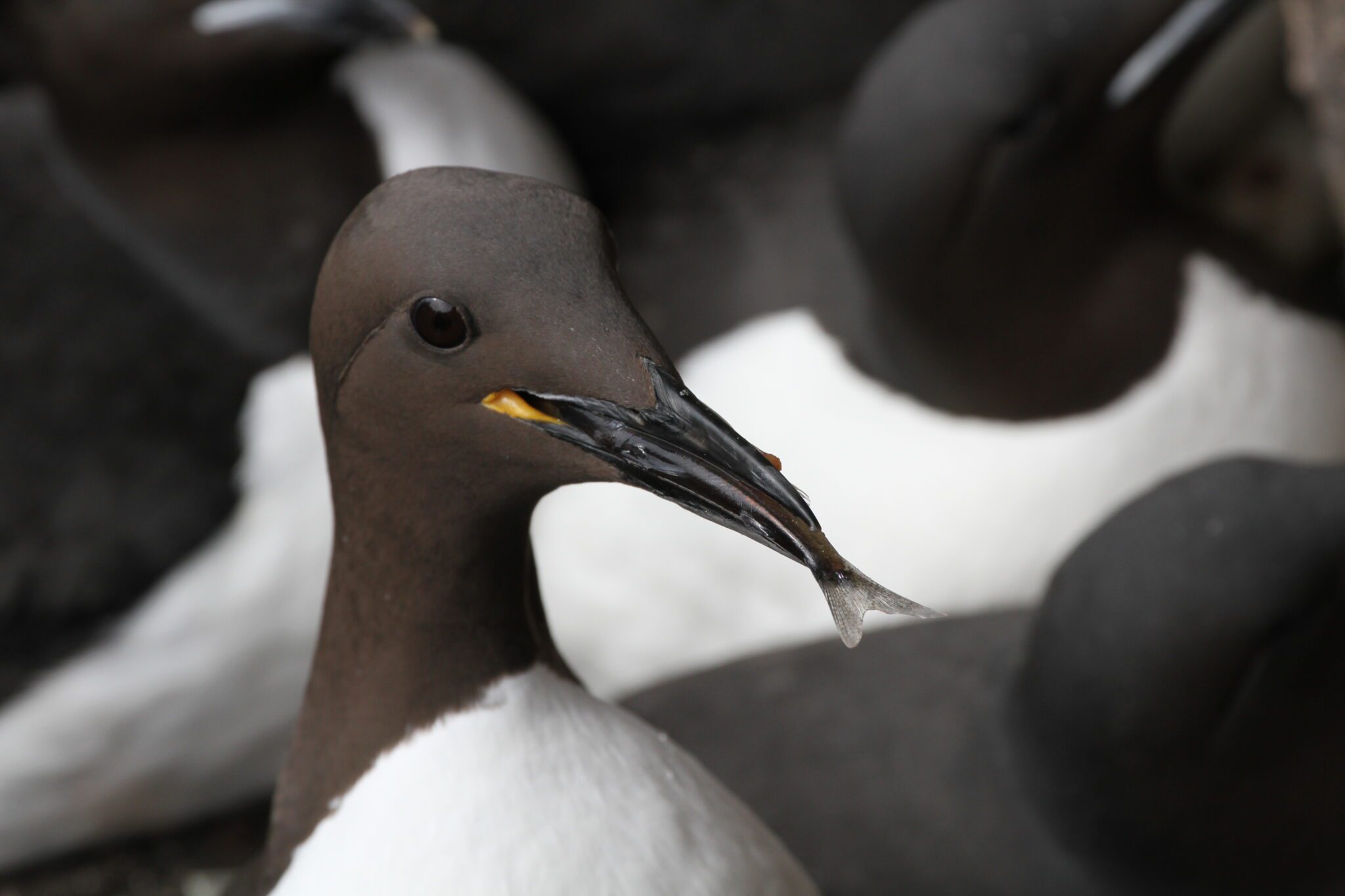
Photo © Erlend Lorentzen, Norwegian Polar Institute
Contact person: Kate Layton-Matthews, Norwegian Institute for Nature Research